
Service providers who rely on reselling third-party WiFi products often become interchangeable, and are forced into constant price competition. Building a strong brand of their own, however, can increase customer loyalty and create healthier profit margins.
Deploying and managing WiFi networks has become a core business for many service providers and system integrators. Demand is growing rapidly, especially among small and medium-sized enterprises (SMEs), which often lack the expertise and resources to manage their own wireless infrastructure.
According to market research firm MarketsandMarkets, global revenue from WiFi-as-a-Service is expected to nearly triple by 2030 compared to 2024 levels. Future Market Insights predicts even stronger growth, forecasting a fivefold increase in market volume by 2035.
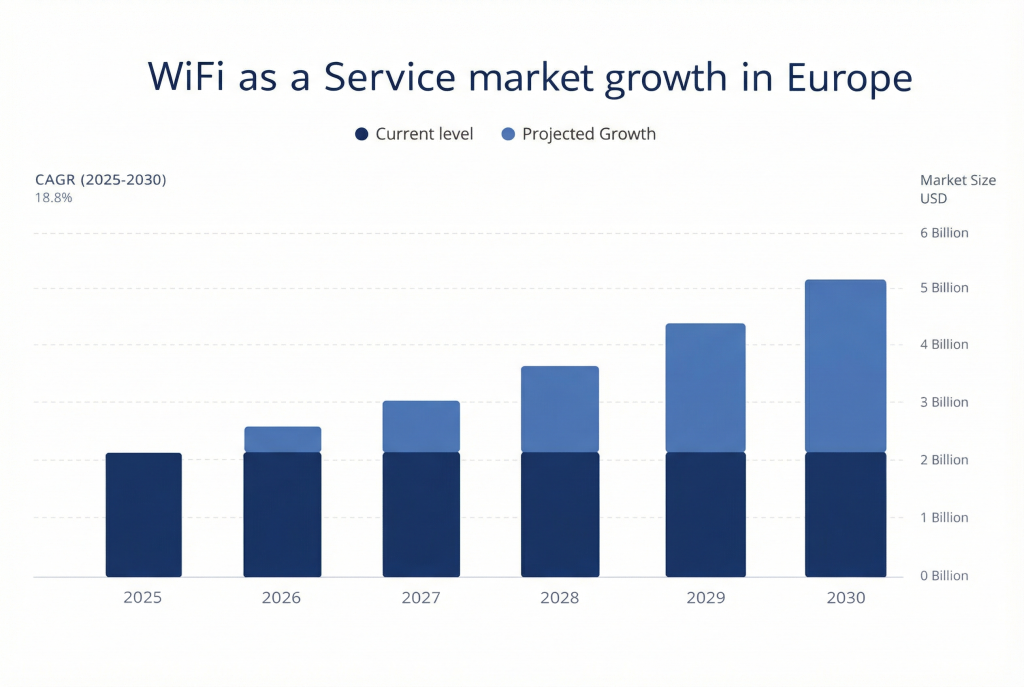
When Price Becomes the Only Differentiator
At first glance, the WiFi services boom appears to be good news for an industry that otherwise sees modest growth in certain areas. The German digital association Bitkom forecasts just 1% growth in telecommunications services in 2026, while IT services are expected to grow by 3.3%.
However, competition is intensifying. Large telecommunications providers and major system integrators are increasingly targeting the SME segment. As a result, local providers face rising competitive pressure, often leading to aggressive price competition.
At the same time, technical complexity and security requirements continue to increase. This puts service providers and system integrators in a difficult position: delivering more sophisticated solutions while operating with ever shrinking margins.
Standing Out Instead of Being Compared: Three Ways Out of the Price Trap
To escape the downward spiral of price competition and improve margins, service providers and system integrators can focus on three key strategies.
1. Specialization
Providers with deep expertise in a specific industry can usually charge higher prices than generalists. Sector-specific knowledge creates clear value for customers and builds trust.
In addition, industry recommendations and targeted marketing campaigns often generate new business more efficiently than broad advertising efforts with high scatter loss.
2. Service Bundling
IT managers in SMEs rarely have the time or resources to evaluate multiple providers and assemble best-of-breed solutions themselves.
Service providers can address this challenge by offering bundled solutions that combine cloud services, telecommunications, networking, and security into a single package. This allows SMEs to receive a comprehensive, integrated solution from one provider.
3. Building Your Own Brand
Providers that resell branded products from third-party manufacturers are easily replaceable. When service contracts expire, customers often search within the vendor ecosystem for a cheaper partner.
This leads to higher churn rates or constant pressure to renegotiate prices.
By contrast, providers who build their own brand and offer products under their own name reduce direct comparability. Customers become less focused on price alone and more willing to commit to long-term partnerships at fair market rates.
How Service Providers Can Successfully Build Their Own Brand
The white-label model offered by network specialist Plasma Cloud illustrates how service providers and system integrators can create their own brand presence without investing in hardware development.
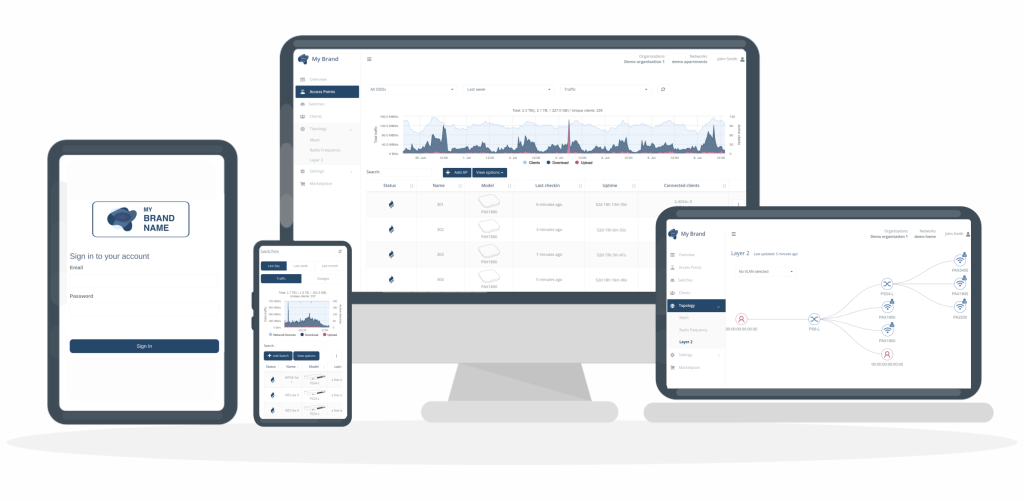
Partners receive fully branded products under their own label: from packaging to Access Points and Switches, as well as the cloud management portal and mobile app used to manage WiFi networks.
Through an API, providers can also extend the platform with customized dashboards or their own applications, allowing them to deliver unique services tailored to their customers’ needs.
Plasma Cloud’s product portfolio includes indoor and outdoor WiFi Access Points, PoE Switches, and Media Converters, covering the entire infrastructure required for modern wireless networks. For specialized use cases, the company can also develop custom solutions.
All devices are plug-and-play and can be managed through Plasma Cloud’s centralized cloud platform. This enables providers to monitor and administer networks remotely from any location.
Features such as remote customer support, automatic failure alerts, and shared access to a centralized management console significantly simplify operations while reducing administrative overhead.
Providers can choose to run the platform within Plasma Cloud’s infrastructure or deploy their own cloud environment in a data center in a country of their choice to meet strict requirements for data protection, compliance, and data sovereignty.
Conclusion: Differentiation Is the Key to Sustainable Growth
In today’s competitive market, excellent products and reliable service alone are no longer enough to stand out. Service providers and system integrators need clear differentiators to escape the cycle of price pressure and shrinking margins while building long-term customer relationships.
Alongside industry specialization and bundled service offerings, developing a strong brand offers one of the most effective strategies.
With Plasma Cloud’s white-label solution, partners can quickly establish their own branded WiFi offering, strengthening customer loyalty while securing healthier margins for sustainable growth.
Discover cloud management today in our free live demo and learn more about our white-label opportunities.
Would you like to test Plasma Cloud in your own environment? Contact us to learn how to get started.